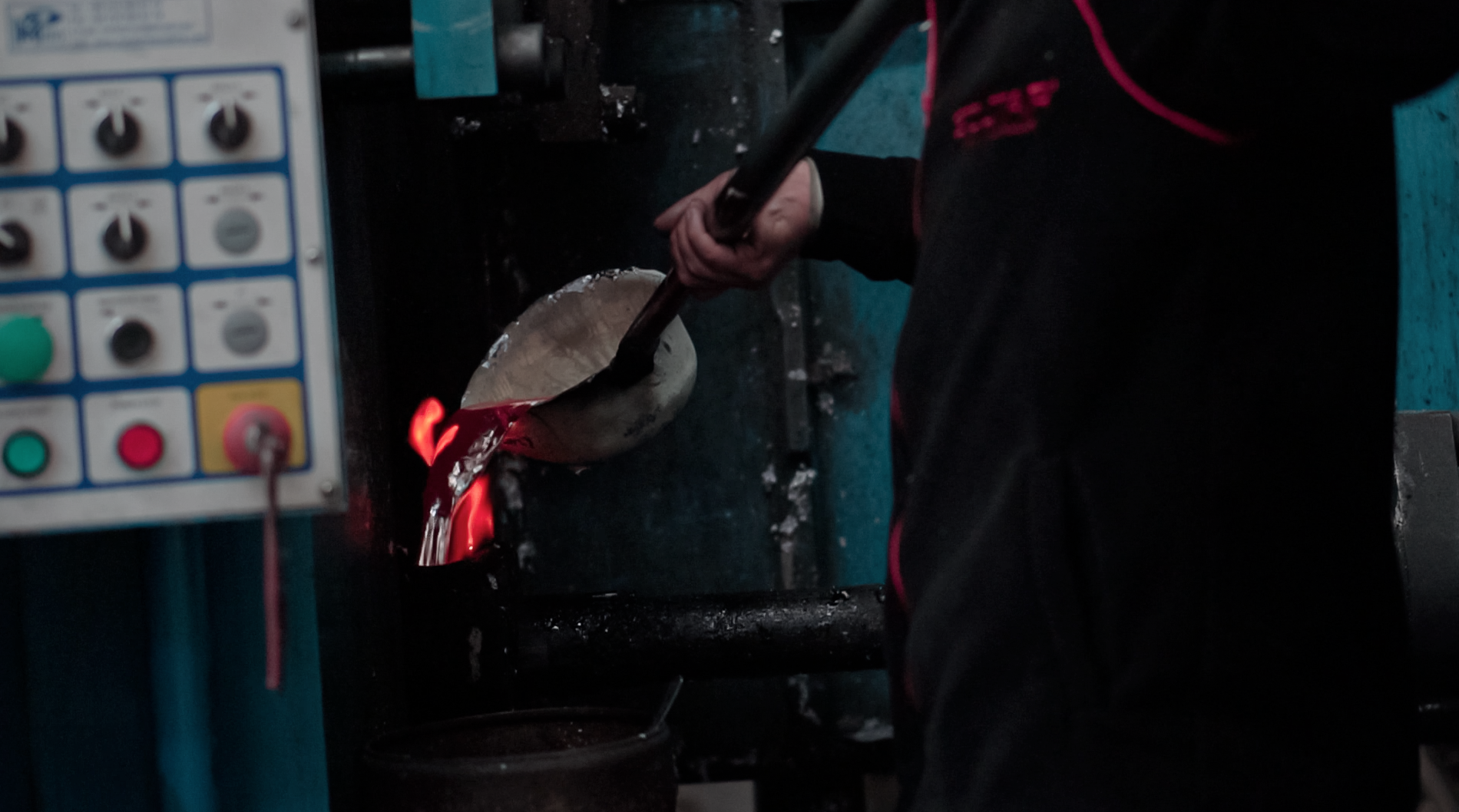
Casting Made
The most classic casting method is sand casting. In other words, the model of the product is first prepared by taking into account the shrinkage shares of wood, wax, etc. materials. This model is then used to form a mold cavity and a sand mold is created. After the runner and gas gaps are given, the material is melted and the gap is transmitted and the product is obtained. Afterwards, the excess lacquer is cleaned and the final product is obtained by final processing. Apart from this, there are many casting methods. These;
- Investment Casting
- Continuous Casting
- Centrifugal Casting
- Permanent Casting
- Die Casting
- Gypsum Casting
There are many varieties such as In particular, precision casting is a method used to produce final products. It minimizes the finishing processes and gives the final product. In terms of mass production, pressure casting is the most used method. With the logic of injection, it can be explained as pushing the molten metal into the mold cavity with a certain force. High pressure and low pressure casting techniques are also available here. In the production of complex shaped parts, precision casting and pressure casting are preferred in high quantities. For example, die casting and die casting processes are preferred for aluminum material.
Advantage / Disadvantages
The casting process provides great advantages especially in the production of shaped products with complex geometry. In addition, it provides many advantages such as obtaining the desired material quality and composition, and producing products by developing special materials. Mostly used parts can be produced by casting technique. Generally;
- The method addresses a very large area and can produce both very small parts and parts weighing tons.
- It is very easy to produce materials with complex shapes, especially those with different internal structures.
- Casting of almost all alloys is possible. Materials such as cast iron are only produced this way.
- It is advantageous in terms of mass production.
- From the point of view of disadvantage, casting is a process that should be done professionally and mistakes can occur if not taken care of. For example, unexpected large porosity, lack of strength, etc. It also requires extra processes after the molding process.
Some disadvantages;
- Very thin sections are difficult, sometimes impossible, to obtain.
- It is economical for the production of a large number of parts rather than a small number. But sometimes it is indispensable for products that cannot be produced by other methods.
- Although it develops in terms of tolerance with its different varieties, it is still at a disadvantage compared to other methods.
